How IT Growth and Connectivity are Driving Pune Real Estate?
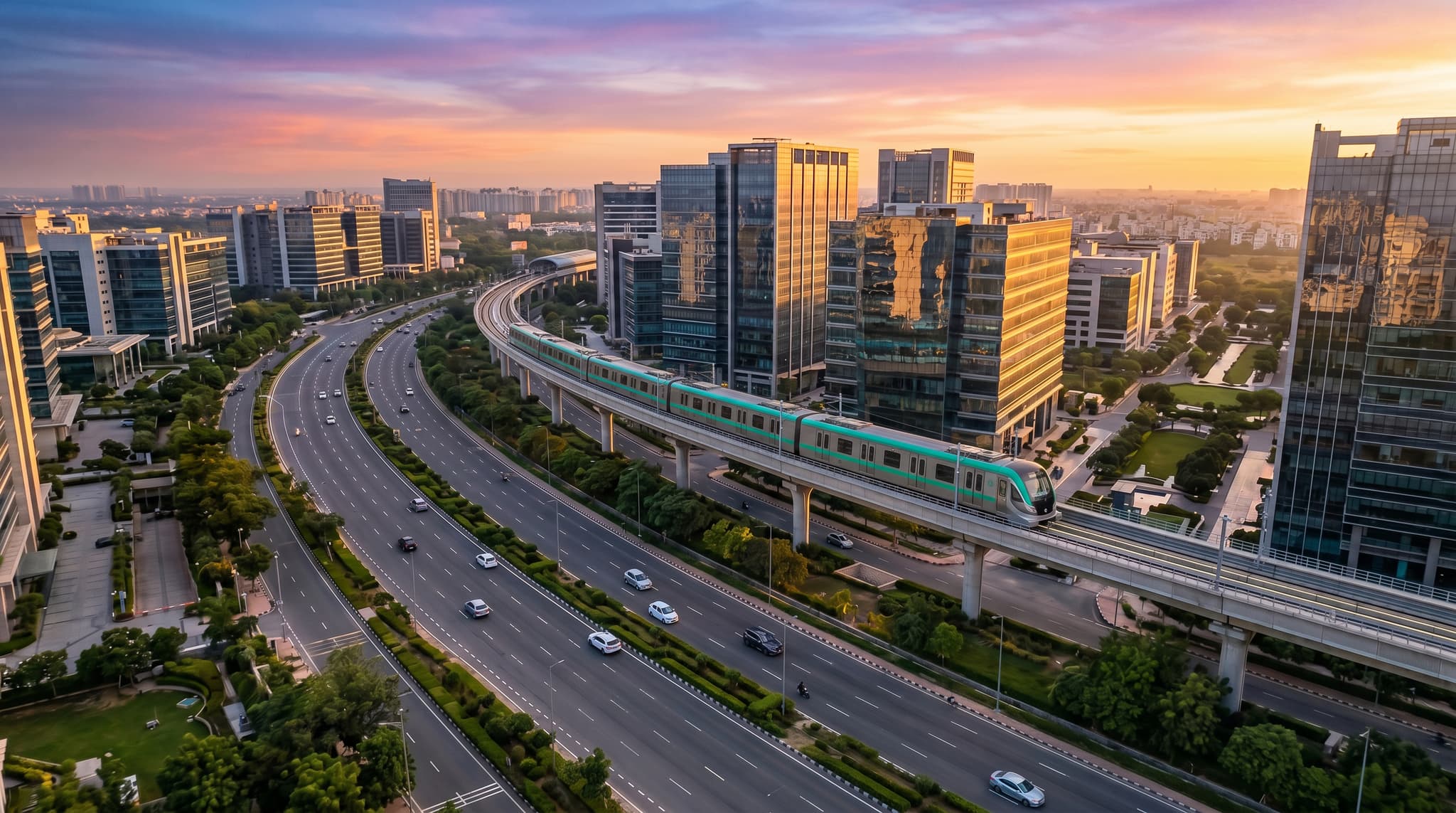

The metamorphosis of Pune from an old industrial town into a high-tech city with economic dominance has brought about changes in residential properties in Pune. The growth of information technology parks, improvement in transportation, and increased attention from top real estate companies in Pune has laid a solid platform for commercial properties. Given the fact that Pune is providing its fair share to the exports of software from Maharashtra, which amounts to ₹1.74 lakh crore during the period of March 2025 to January 2026, the city’s growth in IT sector can be seen impacting its property market.
Why IT and Connectivity Matter for Pune’s Property Market?
One of the important factors that determine the location of residences and workspaces is connectivity and job opportunities. For property investors, locations that have robust IT ecosystems and connectivity are favorable since they offer better occupancy rates and yields in residential properties in Pune. This can be observed by analyzing the development trajectory of Pune.
1. GCCs and Office Demand on Commercial Property Development
One of the most interesting economic phenomena of Pune is the growth of Global Capability Centers, or GCCs, which are technology and service centers of multinational companies and also used in top real estate companies in Pune. GCCs now represent around 15%–20% of India’s high-quality office space, and Pune is a notable contributor because of the established IT infrastructure in the city.
This has a direct impact on the commercial property market in Pune because there is greater demand for good quality office space and commercial properties that arise because of the growth of businesses. High demand usually implies good returns on investments for property developers.
2. Major Office Leases Indicate Growing Company Optimism
Some recent transactions show that Pune is becoming increasingly popular as an IT hub or business center. For instance, Boston Scientific, a globally-renowned provider of medical devices, signed an agreement to lease more than 1.3 lakh square feet of office space in the Wakad region of Pune.
This highlights the significance of major leases for investors as they:
- Indicate continuous demand for commercial real estate infrastructure.
- Enhance the potential for long-term rentals and appreciation of property value.
- Attract support businesses like shared workspaces, coffee shops, etc.
These reasons enable investors to expand their investment horizons from residential properties in Pune to commercial properties in Pune.
3. Connectivity Increases Urban Movability and Property Appreciation
Connectivity in the form of roads, ring roads, or upcoming transportation systems plays a role in increasing property demand. Infrastructure developments being undertaken in Pune such as the construction of an outer ring road have been created to facilitate better access in and out of Pune, ease traffic flow, and create connections between major hubs.
- Previously distant areas become attractive for commercial and residential use.
- Commuter‑friendly zones see greater demand from professionals and office tenants.
- Long‑term connectivity projects can drive appreciation in under‑developed markets.
4. The IT Ecosystem Fuels Demand for Diverse Residential Requirements
The IT sector of Pune not only creates a demand for office space but also generates demands for more housing. As tech employees move into the city, their demand for residential proximity to the workplace fuels the need for residences in Pune. Mixed-use developments are sought after because they offer a balance between residential and commercial spaces along with leisure.
As Pune continues to grow as an employment centre, residential segments (from compact studio homes to larger family apartments) benefit from this ripple effect, making Pune attractive to both homeowners and real estate investors alike.
5. Stable Office Market Strengthens Commercial Confidence Over Time
Pune maintains steady growth in rental yields regardless of changes in the volume of newly available commercial properties. In 2026, office rents in Pune were up by around 5 %, while net office occupancy remained solid in major corporate centers such as Baner, Hinjewadi, and Kharadi.
The consistency in the rental market enables investors to feel confident about generating income from commercial real estate investments in Pune despite economic changes.
Runal’s Contribution in the Emerging Market Landscape
As a result, property developers such as the Runal Group are making efforts to develop according to changing demand patterns. Having 33+ years of experience, with 26 developments completed single-handedly, having more than 3 million sq ft of its portfolio, and 3 commercial projects ongoing at the moment, Runal understands the emerging market trends in this regard.
Whether this is because of their smartly placed residential projects or because of their mixed-use developments utilizing the burgeoning economy of Pune, Runal’s portfolio indicates the company’s insight into the real estate market opportunities of Pune in the long run.
Conclusion: IT and Connectivity – A Driving Force Behind Sustainable Growth
The convergence between IT and connectivity growth in Pune is driving its real estate landscape in a very interesting direction. Both the demand and value of commercial real estate in Pune are rising, making it a smart choice for investors who want to invest wisely.
In order to capitalize on the structural growth of Pune, investors should look into areas that have high employment, quality infrastructure, and connectivity – which makes it an attractive investment option for investors who are looking at Pune as a real estate market for the future in 2026 and beyond.
FAQ
Pune’s rapid IT expansion, growing employment opportunities, strong infrastructure development, and improved connectivity are driving high demand for both residential and commercial properties.
The IT sector attracts professionals and multinational companies, increasing demand for office spaces, rental housing, and mixed-use developments across key locations in Pune.
Global Capability Centers (GCCs) are technology and business operation hubs set up by multinational companies. Their growth boosts demand for premium office spaces and nearby residential properties.
Locations like Baner, Hinjewadi, Kharadi, and Wakad are becoming prominent commercial hubs due to strong IT presence and better infrastructure connectivity.
Infrastructure projects such as ring roads, metro expansion, and improved highways enhance accessibility, making nearby areas more attractive for residential and commercial investments.
Yes, Pune’s stable office market, rising rental yields, growing corporate presence, and increasing demand for quality office spaces make it a promising commercial investment destination.
Related Blogs

New Residential Properties in PCMC: What Homebuyer...

How Real Estate Builders in Pune Are Adapting to t...

Property Investment in Pune: How to Calculate Rent...

Commercial Property vs Office Spaces in Pune: Whic...

Top Reasons Why Builders in Pimpri Chinchwad Are A...

Upcoming Commercial Projects in PCMC: Why Business...

How Commercial Investment Projects in Pune Generat...

Office Spaces in Pune: What Businesses Should Cons...

A Homebuyer's Checklist Before Purchasing Resident...

How Builders in Pimpri Chinchwad Are Benefiting fr...